
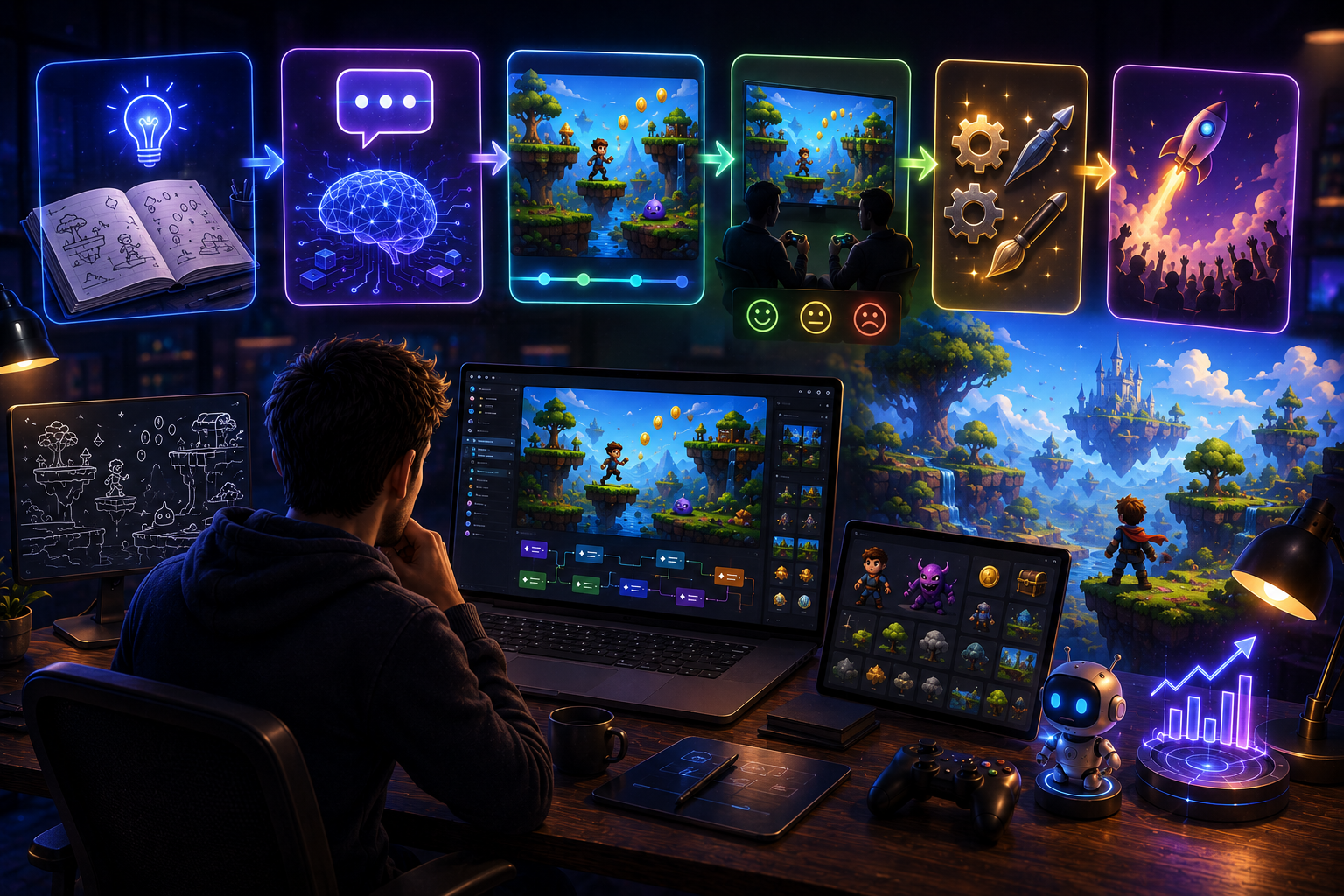
How to Turn a Game Idea Into Reality Using AI
Most game ideas never make it past the daydreaming stage, not because they’re bad, but because the distance between “I have an idea” and “I have something real” used to feel enormous. AI has genuinely closed that distance. Turning a concept into an actual, playable reality is no longer a months-long technical undertaking, it’s a process you can start the same day the idea occurs to you.
Here’s how that process actually works, from a rough thought to something real.
Why Ideas Used to Stay Ideas
The Technical Gap Was the Real Obstacle
A game idea, however clear in someone’s head, required translation into code before it could exist as anything playable. That translation step demanded skills most idea-havers simply didn’t possess, which meant countless promising concepts never moved past being a passing thought.
Time Investment Discouraged Starting at All
Even for people willing to learn, the sheer time commitment required before a first version became testable discouraged a lot of people from ever beginning. Knowing that weeks or months stood between you and any real feedback made starting feel like a serious gamble.
How AI Closes That Gap
Describing Instead of Building From Scratch
Instead of learning to code, you describe your idea directly: what the player does, what the goal is, what happens when they succeed or fail. Make your own game platforms take that description and translate it into a working prototype, turning what used to require deep technical knowledge into a matter of clear communication.
Seeing Results Immediately
Because the translation from description to playable version happens quickly, you get to react to something real almost right away. That immediacy matters enormously, it’s the difference between an idea staying abstract and an idea becoming something you can actually evaluate.
The Actual Process, Step by Step
Step 1: Get Specific About What You’re Building
Before generating anything, define the single repeated action your player will perform. Vague concepts produce vague first prototypes, while specific ones give the platform something concrete to work with.
Step 2: Describe It in Plain Language
Explain your idea the way you’d explain it to a friend, no technical jargon required. The clearer and more specific your description, the closer your first generated version will land to what you actually imagined.
Step 3: Play the Rough Version Honestly
Resist adjusting before you’ve actually played it. This is the moment your idea stops being abstract and becomes something real enough to evaluate on its own merits, not just on how it sounded when you first thought of it.
Step 4: Compare What You Got to What You Imagined
Sometimes the gap between expectation and reality reveals a problem with the original concept. Sometimes it reveals a better direction than the one you planned. A game like 99 Nights in the Forest Sonic Edition shows how a survival-style concept can take on real identity and polish once it’s actually built and refined, rather than staying a rough idea on paper.
Step 5: Refine Through Targeted Adjustments
Change one element at a time, difficulty, pacing, a specific mechanic, and test after each change. This is how a rough first version becomes something genuinely good, through deliberate, isolated iteration rather than sweeping, simultaneous changes.
Step 6: Get Real Feedback From Someone Else
Once your rough version feels solid to you, get an outside reaction. Someone unfamiliar with your project will notice things, confusion points, moments of genuine engagement, that you’ve likely stopped seeing clearly on your own.
Step 7: Polish Toward Something Finished
Once the core mechanic is confirmed to work, shift attention to feel: tightening controls, refining feedback, smoothing pacing. This is the stage where your idea fully becomes a real, complete experience rather than just a working proof of concept.
What Makes This Process Actually Reliable
Fast Feedback Prevents Wasted Effort
Because you find out early whether your idea works, you avoid the expensive mistake of building extensively around a concept that turns out not to be fun. That early signal is one of the most valuable things AI-assisted development offers.
More Room to Test Multiple Directions
Since generating a new version costs relatively little time, you can test several variations of your idea before settling on one. That comparison tends to produce a stronger final direction than committing to the very first version you thought of.
The Idea Still Has to Be Yours
The platform executes what you describe, it doesn’t invent the underlying creative spark. Turning an idea into reality still requires you to know what you’re trying to build and why it matters, the tool just removes the technical barrier that used to stand in the way of finding out if that vision works.
Common Mistakes That Slow This Process Down
Overexplaining Instead of Being Specific
Long, elaborate descriptions often produce vaguer results than short, precise ones. Clarity about the core action matters more than describing every detail you can imagine upfront.
Skipping the Honest Playtest
It’s tempting to keep adjusting your idea in your head instead of actually playing the rough version and reacting to it directly. Real information from real play beats assumption every time.
Treating the First Version as the Final One
A generated first version is a draft, not a finished product. Expect to iterate several times before your idea truly feels like the reality you originally imagined.
Final Thoughts
Turning a game idea into reality using AI isn’t about skipping the real creative work, it’s about removing the technical barrier that used to keep so many good ideas trapped as just ideas. The process still depends on the same things it always has: clarity about what you’re building, honest playtesting, and disciplined iteration based on how the game actually feels.
The distance between having an idea and holding something real has never been shorter. What happens with that distance now depends entirely on whether you’re willing to take the first step and describe what you want to build.




One Comment