
25GBASE-LR from a Cost-Control Perspective: Getting More Bandwidth Without Overspending
When Budget Becomes the Real Constraint
In network planning, technical requirements are only part of the story. The other part—often the deciding factor—is budget. It’s one thing to design the “ideal” network on paper, and another to actually build something that fits within financial limits.
This is where choices start to look different.
Instead of asking “what’s the fastest option available,” the question becomes “what gives us enough performance without pushing costs too far?” And in that context, 25GBASE-LR tends to come up quite often.
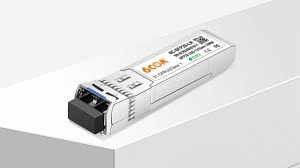
Defined under the IEEE 802.3, 25GBASE-LR supports 25Gbps transmission over single-mode fiber up to around 10 kilometers. It doesn’t sit at the top of the performance ladder, but it occupies a space where cost and capability feel more balanced.
For many networks, that balance is exactly what’s needed.
Avoiding the Cost Jump to Higher Speeds
One of the less obvious challenges in upgrading networks is that costs don’t always scale linearly with speed.
Moving from 10G to 25G is often manageable. But jumping to 100G can involve more than just new modules—it may require new switches, higher power budgets, and sometimes changes to cooling or rack design.
That creates a noticeable step in overall investment.
25GBASE-LR helps avoid that jump.
It delivers a meaningful increase in bandwidth without triggering a full infrastructure upgrade. In many cases, existing platforms already support 25G through SFP28 ports, which means the upgrade can be limited to optics and configuration rather than entire systems.
From a budgeting perspective, that’s a significant difference.
Making Better Use of Existing Fiber
Another cost factor that doesn’t always get enough attention is the physical infrastructure.
Deploying new fiber can be expensive and time-consuming, especially in environments where routes are fixed or difficult to modify. Even when additional fiber is available, expanding its use still comes with installation and maintenance costs.
25GBASE-LR works over standard duplex single-mode fiber, which is already widely deployed.
This means upgrades can happen without touching the physical layer. The same cables, the same patch panels, the same routing paths—all remain in place.
You’re increasing capacity, not rebuilding infrastructure.
That kind of efficiency can make a big difference in total project cost.
Spending Where It Actually Matters
In many networks, not every link carries the same level of traffic.
Some connections handle critical workloads and require more bandwidth. Others operate well below their limits. Treating all links the same during an upgrade can lead to unnecessary spending.
25GBASE-LR supports a more selective approach.
Instead of upgrading everything, you can focus on the links that need improvement. A few key connections move to 25G, while the rest remain at 10G until there’s a clear reason to change.
This targeted upgrade model helps control costs while still addressing performance issues.
Over time, more links can be upgraded as needed, spreading the investment across multiple phases.
Operational Costs Matter Too
Cost isn’t just about hardware.
Operational expenses—time spent on deployment, maintenance, and troubleshooting—also add up over the life of a network.
Technologies that are complex or unfamiliar can increase these costs, even if their initial performance looks attractive.
25GBASE-LR tends to avoid that problem.
It behaves like standard Ethernet optics, which means existing tools and processes can be reused. Teams don’t need extensive retraining, and there’s no need to introduce new management systems just to support it.
This keeps operational overhead relatively low.
And over time, those savings become just as important as the initial purchase price.
What You Give Up (and Why It’s Often Acceptable)
Of course, choosing a more cost-effective option usually involves trade-offs.
25GBASE-LR doesn’t provide the same level of bandwidth as 100G solutions, and it doesn’t offer the same scalability for future growth. If traffic increases significantly, another upgrade may eventually be required.
But in many cases, that future demand isn’t immediate.
Paying for capacity that won’t be used right away can be just as inefficient as under-provisioning. By choosing 25G now, organizations can align their investment more closely with current needs.
When demand grows, they can reassess and upgrade again.
This staged approach often leads to better overall cost control.
A Fit for Budget-Conscious Network Design
In practice, 25GBASE-LR shows up frequently in environments where cost control is a priority.
Enterprise networks with multiple sites, campus environments with distributed buildings, and mid-sized data centers all benefit from solutions that provide steady improvements without large upfront costs.
In these cases, the goal isn’t to build the most advanced network possible—it’s to build one that performs well within realistic constraints.
25GBASE-LR fits that goal naturally.
It doesn’t try to do everything. It just does enough, efficiently.
Conclusion
25GBASE-LR offers a cost-effective approach to increasing network capacity without triggering large-scale infrastructure changes. By delivering higher bandwidth over existing single-mode fiber and maintaining compatibility with familiar Ethernet systems, it allows organizations to improve performance while keeping both capital and operational expenses under control. For networks where budget plays a central role in decision-making, this balanced combination of capability and efficiency makes 25GBASE-LR a practical and sustainable choice.